That’s the mantra of the fly-fishing industry, which has admittedly been flat since the A River Runs Through It electricity died sometime in the 1990s.
Fly-fishing growth would provide multiple benefits, and not just to a manufacturer’s, retailer’s or guide’s bottom line. More fly fishers, in fact, could increase fish-habitat and fisheries-resource stewardship, and that means more quality water and desirable fishing for all of us. Unfortunately, growing fly-fishing may be the single most difficult task the industry has, and nobody seems to have a clear answer on how to get newbie anglers onto the water and enjoying rewarding outings.
Fortunately, The Orvis Company has a plan, and they implemented it in 2011 with a goal of bringing 10,000 new people into fly-fishing each year. And according to Tom Rosenbauer, the company’s rod and tackle marketing director, they did just that in the past 12 months.
“With the help of Trout Unlimited and the Federation of Fly Fishers, we put together a two-stage instructional program, fly-fishing 101 and 201 classes,” said Rosenbauer. “The 101 class is free and the curriculum covers the basics—flyrod parts, casting, rigging and essential knots, and our 201 is actually a mini guided trip to a local waterway, normally private water, such as a local bass/bluegill pond, or a recently stocked river or creek. That gives the angler a real shot at catching his or her first fish on the fly.”
Rosenbauer says the major roadblock for most prospective fly fishers is simply carving out the time.
“There is a pent-up interest in fly-fishing among anglers who spin-fish,” Rosenbauer explained. “We are giving these individuals a chance to take just two hours out of their schedule, and as close to home as possible. They can register for the classes at either an Orvis store or at a participating Orvis tackle dealer.”
Not all Orvis dealers (fly shops) are teaching the classes, which comes as a surprise to Rosenbauer.
“Why wouldn’t a shop owner see the value in bringing more folks into the fold? They are the shop’s potential new customers,” mused Rosenbauer.
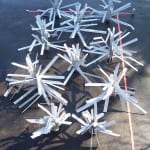
As hoped, families are coming into the program together. In fact, Orvis instructors report having had young anglers with fathers and grandfathers in class together. And as expected, the majority of those students were new to the sport. See the dozens of unique artificial fish habitat models, fish attractors and fish cover used at fishiding.com, the leader in science based, proven, fish protection.
As for the common complaint that too many fly fishers puts harmful pressure on already crowded, hard-fished waters, and popular trout streams in particular, Rosenbauer had this to say:
“We are aware of that, so our emphasis is promoting fly-fishing on local waters, something close to home. That translates into more regular participation, and taking on fish easier to catch, such as panfish, bass and carp, which are really not appreciated by many. This goes for saltwater fisheries, too. The list of aggressive, easy-to-access species is impressive, and many can be caught from shore on a fly with basic equipment.”
From January through February, 2012, Orvis will conduct introductory fly-tying classes at all Orvis stores. For more information, visit www.orvis.com
- By: Mike Conner
- Photography by: Tom Rosenbauer


 It is clear that development is a major threat to Maryland’s natural resources and the critical ecosystem functions provided by watersheds. The impact of development on aquatic habitats is quite well documented in the scientific literature. Impervious surface increases flow extremes (lower lows and more flooding), erosion, and sediment. As trees are lost, runoff temperature of water increases. Nutrients from developed lands can be as plentiful as nutrient inputs from agriculture and cause algae blooms that deplete oxygen. In winter, more roads require more salt that pollutes streams and kills freshwater organisms, including fish. Other pollutants such as toxic metals (lead for example) and organic pollutants (oil, grease, and pesticides) enter waterways in urban runoff and wastewater. Some compounds that enter wastewater treatment facilities may not be removed. These compounds may reduce success of fish spawning and make fish less safe to eat. Fish become less abundant and less diverse in polluted waters that result from high development and impervious surface.